

Introduction
Most companies think that sales begin when they start talking to a customer.
In reality, it starts much earlier — the moment a user lands on your website.
The problem is that this process is usually fragmented:
a form collects data
someone replies hours later
the lead is unclear
some customers drop off
The result? Lost sales opportunities.
Sales automation changes this approach.
Instead of chaos, it creates a structured system that guides the user from the first interaction to a purchase decision.
In this article, we’ll show exactly how such a system works — based on a real model used in an AI Chat Assistant.
Sales automation is a system that automatically collects, qualifies, and processes leads, guiding users from their first visit to contact or purchase — without manual work at every stage.
Quick answer: Sales automation is a structured system that turns website visitors into customers by collecting, qualifying, and managing leads automatically. It connects marketing, sales, and follow-up into one process, reducing delays and increasing conversion rates.
- What is a lead → customer system
- What are the stages of sales automation
- How lead capture works
- How lead qualification works
- How lead handling works
- What happens after a lead is submitted
- How to implement the system
What is a lead → customer system
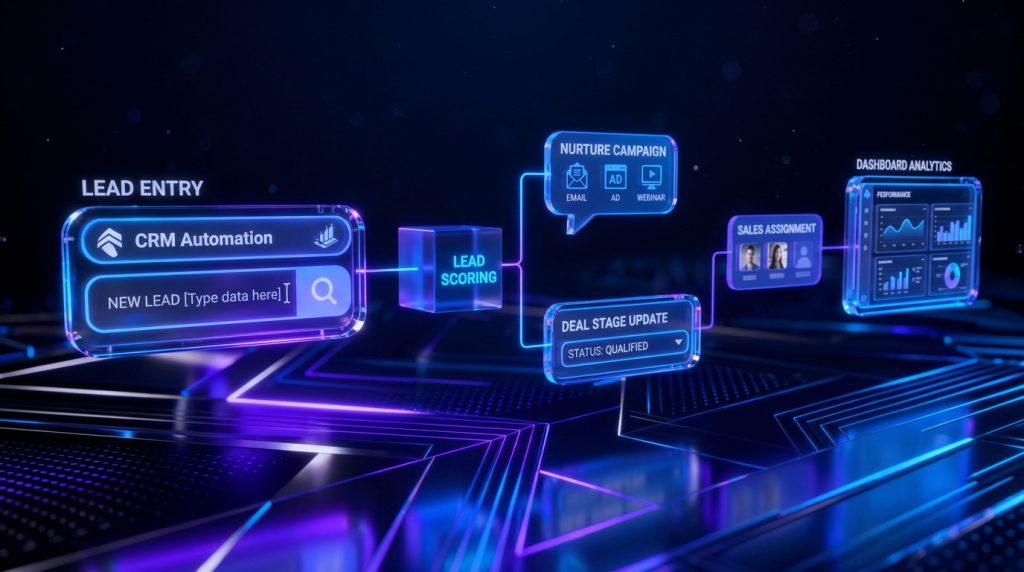
The lead → customer system is a structured process that guides a user through every stage of the sales journey — from the first interaction to the final decision.
Unlike the traditional approach, where each stage is separate, here everything is connected into one system.
This means that:
- the website captures leads
- the system qualifies them
- data is automatically delivered to the company
- follow-up actions are triggered
Sales automation is not a tool. It is a system that connects marketing, sales, and customer service.
What are the stages of sales automation
Every effective sales system consists of several key stages.
- 1. attracting users (SEO, ads, content)
- 2. capturing attention (website, CTA, chat)
- 3. lead capture
- 4. lead qualification
- 5. handover to sales
- 6. follow-up and communication
The biggest mistake companies make is focusing only on the beginning (marketing) and ignoring the middle of the process (qualification and handling).
And that’s exactly where money is lost.
How lead capture works
Lead capture is the first moment when a user takes action.
This can be:
- a contact form
- a chat
- an AI Chat Assistant
The best results come from systems that guide users — instead of forcing them to describe their problem on their own.
That’s why solutions like AI Chat Assistant are increasingly used, turning forms into conversations.
How lead qualification works
Qualification is the stage that determines sales quality.
The system collects information such as:
- customer goals
- project stage
- industry
- problem
This ensures that the company receives structured leads instead of random enquiries.
A well-qualified lead can shorten the sales process by up to 50%.
How lead handling works
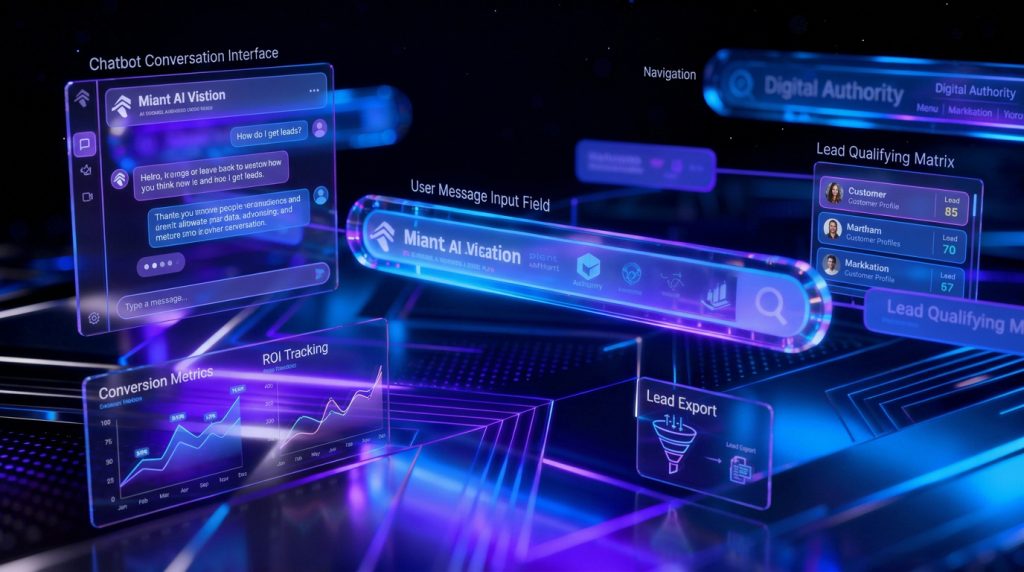
Once a lead is collected and qualified, it is passed to the company — but automation doesn’t stop there.
The system can:
- send notifications
- save data in a CRM
- assign the lead to a team member
- prepare context for the conversation
This means salespeople start conversations with full context instead of starting from scratch.
What happens after a lead is submitted
The biggest advantage of the system appears after the lead is submitted.
Possible automations include:
- sending an email to the client
- Slack notifications
- adding the lead to CRM
- tagging and classification
This eliminates delays and increases the chances of closing the sale.
How to implement the system
The most important thing is a system-based approach.
You don’t start with tools — you start with the process.
Steps:
- sales process analysis
- flow design
- chat implementation
- integrations
This is what separates companies that grow from those that simply “collect enquiries.”
It is a system that automatically manages the process from lead capture to contact or sale.
No — it supports them and reduces workload.
Chat, CRM, automation tools (Make / n8n), and a form system.
Yes — especially where every lead matters.

Turn your website into a lead-generating machine with AI
Your website shouldn’t just inform — it should convert. The AI Assistant helps capture leads, qualify visitors, and guide them towards the right solution in real time.
See how you can use AI to increase conversions, automate communication, and turn traffic into real business opportunities.
No forms. No waiting. Start conversations instantly.