

Customer service in many companies still looks the same:
someone sends an email
someone calls back
someone replies a few hours later
The problem?
Response times are slow, answers are inconsistent, and some customers drop off before they receive any reply.
AI in customer service changes this model completely.
Instead of reactive support, you have a system that works instantly — it responds, guides the conversation, and sells at the same time.
What matters is this:
it is not just support.
It is a combination of:
customer service
sales
lead qualification
In this article, I’ll show how an AI chatbot works as a support + sales system and why companies are increasingly using it instead of traditional contact methods.
AI in customer service is a system in which a chatbot automatically answers questions, guides the user through a conversation, qualifies their needs, and at the same time supports sales — operating 24/7 without delays.
Quick answer: AI in customer service uses chatbots to answer questions instantly, guide users through conversations, qualify their needs, and support sales at the same time. Instead of only reacting to enquiries, the system works 24/7 as both support and a lead generation channel.
- What AI in customer service is
- Chatbot as support + sales
- How an AI chatbot works step by step
- How a chatbot answers customer questions
- How a chatbot qualifies customers
- Why AI works better than traditional customer service
- How to implement an AI chatbot in your business
What AI in customer service is
AI in customer service means using systems such as AI chatbots to automatically answer questions, manage conversations, and support users during the decision-making process.
In practice, this means customers do not have to wait for a reply. The system responds instantly — regardless of the time of day.
What matters most is that AI does not only answer questions. It also guides the conversation. This means the user does not receive a single response, but goes through a process that can end with contact or a purchase.
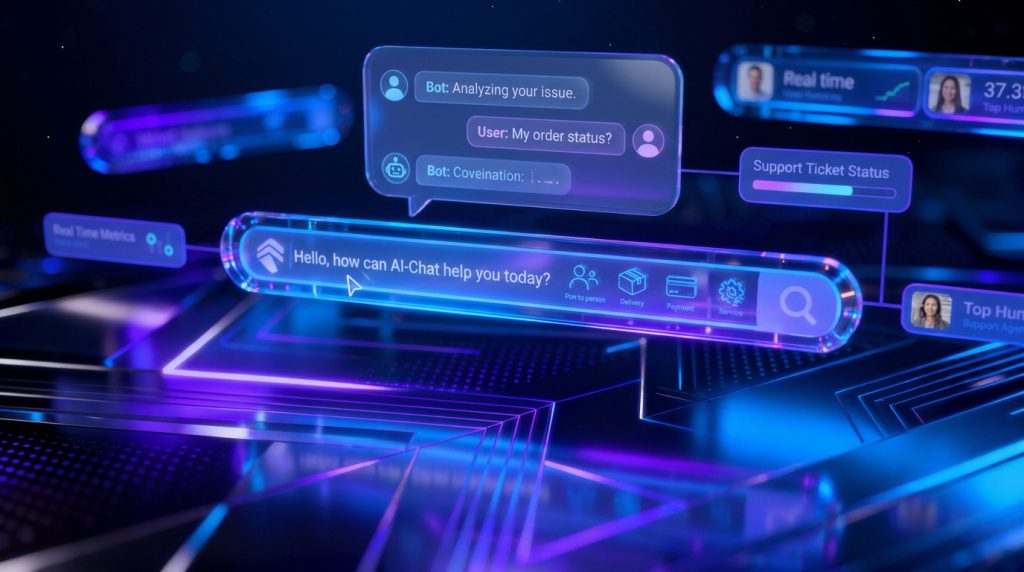
Chatbot as support + sales
Traditionally, customer service and sales are treated as separate functions.
AI combines these two worlds.
A chatbot can:
- answer questions (support)
- explain the offer
- guide the user
- collect leads
- pass enquiries to sales
Every conversation with a customer can be both support and sales at the same time.
As a result, the business does not lose the moment when the user is most interested.
How an AI chatbot works step by step
The process looks like this:
- the user asks a question or opens the chat
- the chatbot identifies the intent
- it provides an answer or asks a question
- it continues the conversation
- if needed, it collects data
- it passes the lead to the company
In a more advanced version, the chatbot can use a knowledge base, analyse context, and tailor responses to the user.
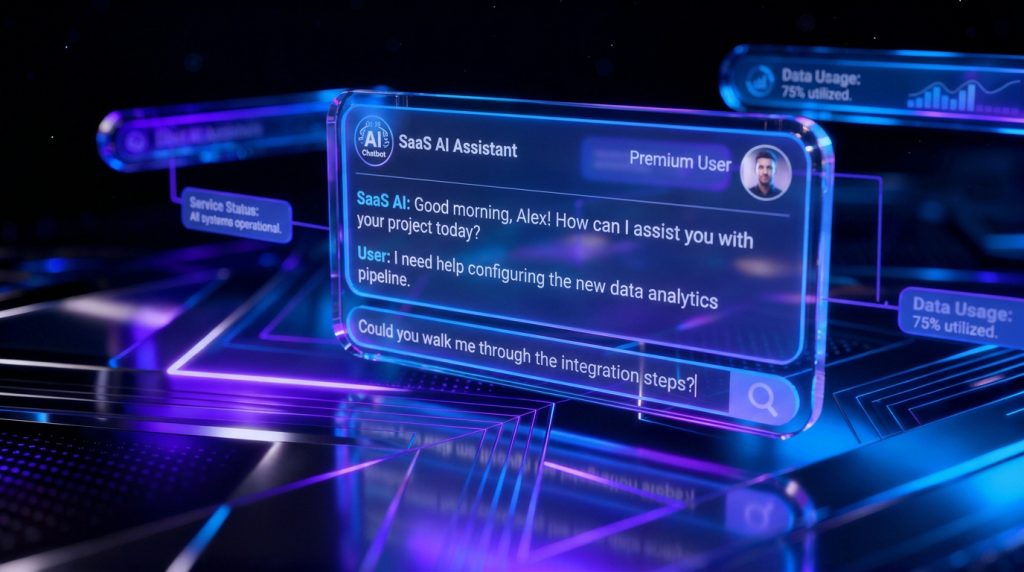
How a chatbot answers customer questions
One of the main uses of AI is automatic responses to customer questions.
Most often these include:
- questions about the offer
- questions about pricing
- technical questions
- pre-purchase questions
A chatbot can use:
- a knowledge base
- FAQ content
- website data
As a result, answers are consistent and available instantly.
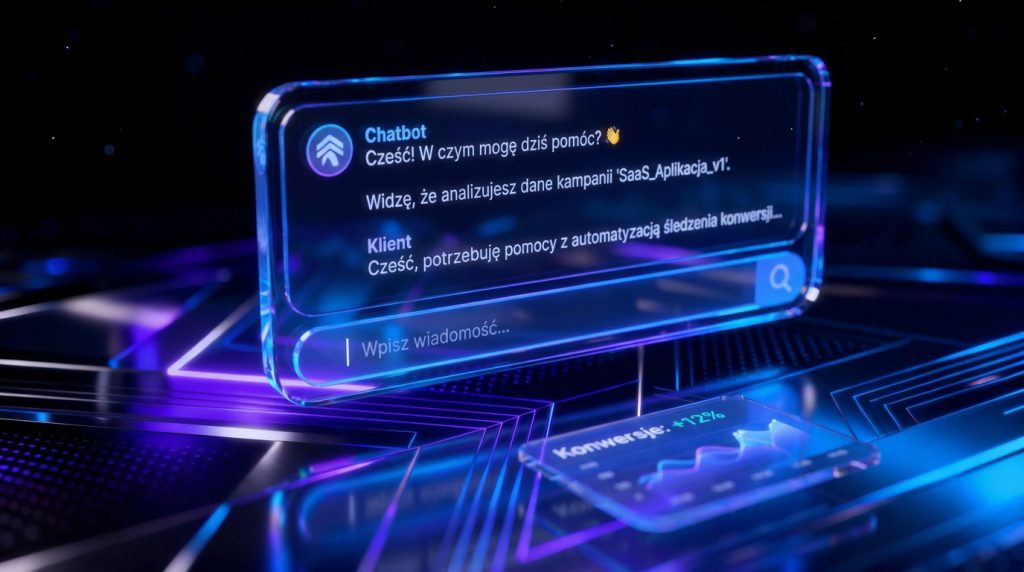
How a chatbot qualifies customers
Beyond answering questions, a chatbot can guide users through a qualification process.
It asks questions such as:
- what do you need
- what stage are you at
- what problem are you trying to solve
This means the company receives a lead with context, not just contact details.
A chatbot turns a conversation into a structured sales process.
Why AI works better than traditional customer service
AI has several key advantages:
- it works 24/7
- it responds instantly
- it is consistent
- it scales without adding staff costs
The most important advantage, however, is speed.
A customer who gets an answer within seconds is far more likely to make a decision than one who has to wait several hours.
How to implement an AI chatbot in your business
Implementation starts by identifying what questions customers ask and which processes can be automated.
Steps:
- define the FAQ
- design the conversation flow
- implement the chat
- integrate it with your systems
The best results come from combining chat with automation and CRM integration.
A chatbot does not replace people. It removes repetitive work and gives the team more time for sales.
Not completely, but it can handle most repetitive enquiries.
Yes — it can guide users and collect leads.
Yes — that is one of its biggest advantages.
Not always — but AI significantly increases its effectiveness.

Turn your website into a lead-generating machine with AI
Your website shouldn’t just inform — it should convert. The AI Assistant helps capture leads, qualify visitors, and guide them towards the right solution in real time.
See how you can use AI to increase conversions, automate communication, and turn traffic into real business opportunities.
No forms. No waiting. Start conversations instantly.