

Just a few years ago, SEO strategy was relatively straightforward. If your website ranked high in Google, users clicked your link and landed directly on your page. Organic search traffic was one of the most important sources of customer acquisition.
Today, however, the search landscape is changing rapidly. More and more queries are resolved without a single click. Users receive answers directly within Google — through featured snippets, knowledge panels, or AI-generated summaries.
This phenomenon is known as zero click search. According to various studies, over 60% of searches now end without visiting any website. In this article, we’ll explore why this is happening — and how businesses can still build visibility and acquire customers in this evolving search environment.
- What is zero click search
- Why Google traffic is declining
- How businesses can stay visible despite zero click
- SEO as a brand-building strategy
What is zero click search
Zero click search refers to a situation where a user gets the answer to their question without needing to visit any website. Search engines display key information directly on the results page.
This is highly convenient for users, as it allows them to find answers instantly. For businesses, however, it means fewer clicks and a fundamental shift in how visibility is achieved in search engines.
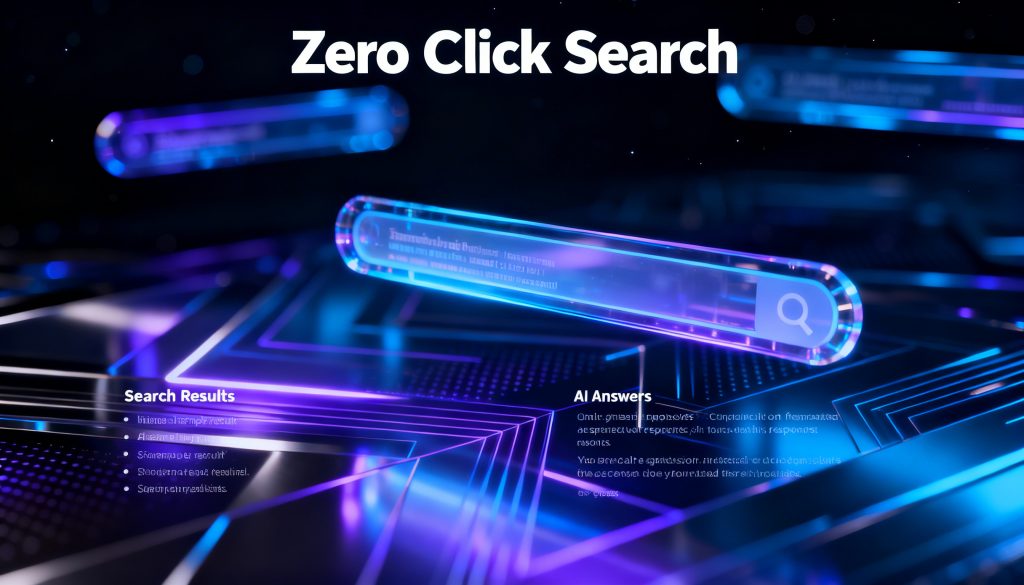
The most common form of zero click search is featured snippets, which appear at the top of search results and display a short excerpt from a webpage.
Another major component is AI answers. AI-powered systems analyze multiple sources and generate concise summaries directly within search results.
Voice search also plays a growing role. When users ask questions via voice assistants, they typically receive a single spoken answer instead of a list of links.
In practice, this means that search visibility is no longer just about getting clicks. Increasingly, it’s about ensuring your brand appears within the answers themselves.
Why Google traffic is declining
The decline in organic traffic is not accidental. It results from several key changes in how Google operates and how users interact with the internet.
One of the main drivers is AI answers. Search engines now frequently present summarized information that satisfies user intent without requiring them to leave the results page.
Another factor is knowledge panels. These panels provide essential information about businesses, people, or products — often eliminating the need for further clicks.
Instant answers also contribute to this trend. These include quick responses to queries such as weather forecasts, definitions, or unit conversions.
As a result, more searches are completed without any website visits. This forces businesses to rethink their marketing strategies and approach SEO from a broader perspective.
That’s why services like website SEO optimisation are increasingly focused on building brand visibility within search ecosystems — not just generating traffic.
How businesses can stay visible despite zero click
Even though search traffic may decline, SEO is far from dead. What’s changing is the way visibility is built.
The first key element is brand visibility. When users repeatedly see your brand in search results — even without clicking — it builds recognition and trust.
The second is entity SEO. Search engines increasingly focus on entities — brands, organisations, and individuals — and the relationships between them. The more consistently your business appears across trusted sources, the stronger its credibility becomes.
- consistent brand presence across multiple content sources
- accurate and unified business information online
- development of a strong expert knowledge base
Another critical factor is content authority. Websites that publish high-quality, expert-driven content are more likely to appear in AI-generated answers.
This is why many companies invest in long-term strategies like content marketing, which help build authority within a specific niche.
A data-driven marketing approach is equally important. Understanding what users are searching for — and what type of content satisfies those queries — is key. This is where marketing strategy and analytics play a crucial role.
SEO as a brand-building strategy
In a zero click world, SEO increasingly resembles a brand-building strategy. Visibility is no longer just about clicks — it’s about being present in answers, contexts, and topic clusters.
Companies that consistently publish valuable content and position themselves as experts are far more likely to appear in search results — even when users don’t click.
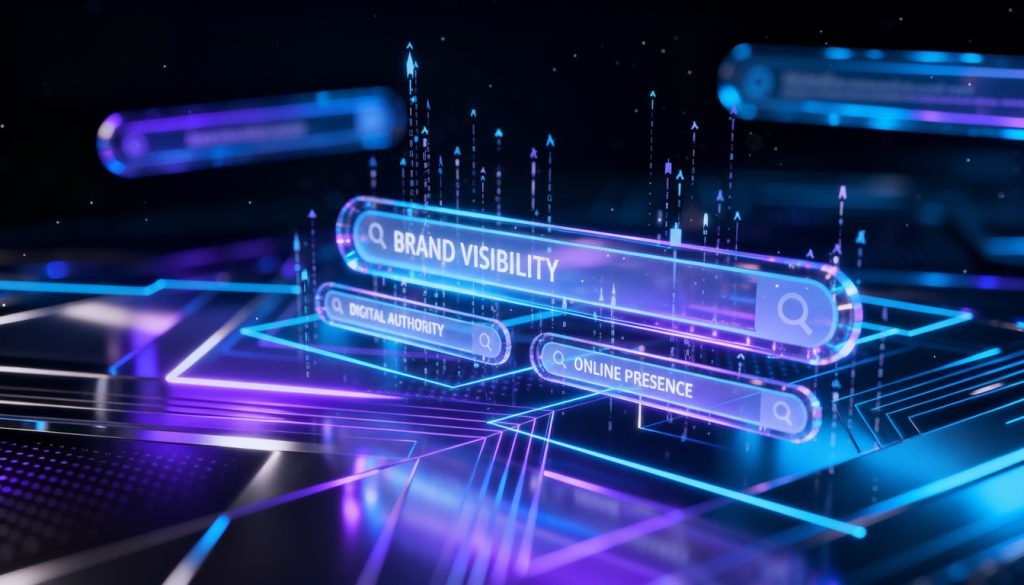
In practice, this requires a shift in mindset. Instead of focusing solely on individual keywords, businesses should build comprehensive knowledge ecosystems around their core topics.
This approach signals to search engines that your website is a reliable and authoritative source — increasing the likelihood of appearing in AI-generated answers.
SEO is no longer just about driving traffic from Google. Increasingly, it’s about building your brand’s presence within the broader knowledge ecosystem of the internet.
That’s why more companies now treat SEO as part of a broader marketing strategy — one that integrates content, analytics, and AI-driven insights.
Agencies like GAGAN MEDIA help businesses design exactly these kinds of strategies — combining digital marketing, technology, and AI solutions into a cohesive growth system.
Zero click search occurs when users receive answers directly within search results without visiting a website.
Search engines increasingly provide answers through featured snippets, knowledge panels, and AI-generated summaries, allowing users to find information instantly.
No. SEO remains essential, but its role is evolving toward building authority, visibility, and brand presence within search ecosystems.
By building strong brand visibility, publishing expert content, and investing in long-term content strategies that increase authority and trust.
Yes. AI is already transforming search into a more conversational and personalised experience, where direct answers replace traditional result lists.

Turn your website into a lead-generating machine with AI
Your website shouldn’t just inform — it should convert. The AI Assistant helps capture leads, qualify visitors, and guide them towards the right solution in real time.
See how you can use AI to increase conversions, automate communication, and turn traffic into real business opportunities.
No forms. No waiting. Start conversations instantly.